
Technology
How to Choose a Film Extruder: Screw Design, L/D Ratio and Output Sizing
Screw geometry, L/D ratio and barrel feeding decide whether an extruder delivers steady melt. How plant engineers specify single-screw extruders for blown film.
In blown film extrusion, the [film extruder](https://xinfumachine.com/products/pipe-extrusion-line) is the workhorse responsible for melting, homogenizing, and pumping polymer against high head pressures. While die heads define web width and layer distribution, the extruder dictates **maximum line output, melt temperature uniformity, and plasticizing quality**.
Sizing a single-screw [extruder](https://xinfumachine.com/products) is not simply a matter of choosing a large barrel diameter. Oversized screws run at low RPM, causing melt stagnation and thermal degradation, while undersized screws forced to run at maximum RPM introduce melt temperature spikes and un-melted gels. Here is how our engineering team sizes film extruders for LDPE, LLDPE, HDPE and geomembrane lines.
<h2>1. Screw L/D Ratio: Why 30:1 and 33:1 Dominate Modern Film Lines</h2> The length-to-diameter (L/D) ratio describes the effective working length of the screw flight relative to its outer diameter. In older blown film machinery, 25:1 or 28:1 ratios were common. Today, modern high-output lines standardise on **30:1, 32:1 or 33:1**.
A longer L/D ratio provides three vital processing benefits:
- **Extended Residence Time for Uniform Melting:** Polyolefins with broad molecular weight distributions require progressive shear heating to fully dissolve crystalline structures without overheating the melt. - **Superior Pressure Generation:** Pumping viscous melt through multi-layer spiral [die heads and molds](https://xinfumachine.com/products/die-head-mold/die-head-mold-for-blowing-machines) generates backpressures exceeding 200 to 350 bar. Higher L/D designs maintain linear pumping rates without surging. - **Mixing Zone Integration:** Higher L/D leaves sufficient barrel length to incorporate dedicated barrier flights, Maddock dispersive mixers, and pineapple or pinned distributive mixing sections.
<h2>2. Grooved Feed vs Smooth Bore Barrels</h2> The choice of barrel feed section design defines the solids conveying mechanism and directly affects output consistency:
- **Smooth Bore Feed Sections:** Depend entirely on frictional drag between polymer pellets, screw surface, and barrel wall. Output is sensitive to head pressure fluctuations and pellet friction coefficients, making them suitable primarily for low-viscosity resins. - **Helically Grooved Feed Bushings:** Feature water-cooled, hardened feed sleeves with longitudinal or spiral grooves. The grooves mechanically key pellets into the screw channels, generating intense pressure in the first 3–4 diameters. This provides **specific output (kg/hr per RPM) virtually independent of die backpressure**.
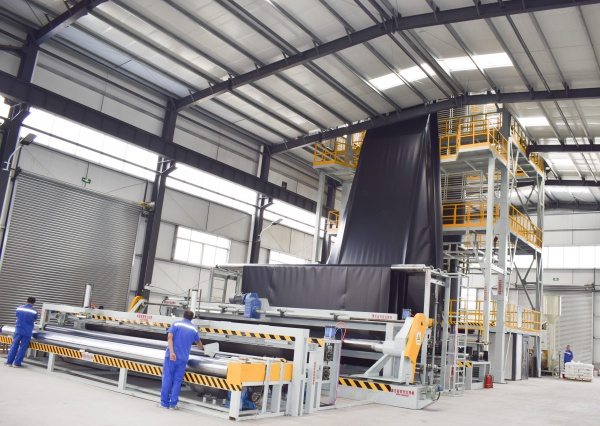
For high-capacity agricultural [greenhouse film blowing machines](https://xinfumachine.com/products/greenhouse-film-machine/5-layer-greenhouse-film-blowing-machine) and heavy-gauge [geomembrane machines](https://xinfumachine.com/products/geomembrane-machine), grooved feed designs are essential to maintain stable throughput during thick-to-thin product transitions.
<h2>3. Barrier Screw Technology for Linear Low-Density (LLDPE) Blends</h2> Standard three-zone metering screws (feed, transition, metering) struggle with modern fractional melt-index (MI) LLDPE and metallocene grades. Because LLDPE has higher shear viscosity than LDPE, solid bed breakup occurs prematurely, sending cold polymer fragments into the die.
A **barrier screw** introduces a secondary flight that physically isolates molten polymer into a melt channel while trapping unmelted pellets in the solids channel. Only fully plasticised polymer can clear the undercut barrier flight, guaranteeing zero unmelted fish-eyes on the finished bubble surface.
<h2>4. Bimetallic Barrels and Wear Resistance for Masterbatch & Regrind</h2> Film formulations running high concentrations of titanium dioxide (white masterbatch), carbon black, calcium carbonate filler (CaCO3), or abrasive regrind rapidly erode standard nitrided screws. When screw flight clearance expands from the nominal 0.15 mm to 0.4 mm, back-leakage accelerates, reducing output by up to 25%.
At Xinfu, our extruder barrels utilize centrifugally cast **bimetallic alloy liners** paired with tungsten-carbide hardfaced screw flights (PTA welding). This metallurgy extends service intervals by 3 to 5 times under abrasive and corrosive recycling conditions.
<h2>5. Matching Extruder Capacity to Multi-Layer Co-Extrusion Dies</h2> On co-extrusion lines, matching extruder sizes to layer percentage targets prevents operating extruders at extreme RPM limits:
- **3-Layer A/B/A Structures:** Outer skin extruders (A layers) typically handle 20% to 30% of total output, while the core extruder (B layer) handles 50% to 60%. A balanced line might pair twin Φ55 mm extruders for the skins with a single Φ75 mm or Φ90 mm extruder for the core. - **5-Layer Engineering Structures:** Allows operators to run dedicated thin functional skins, adhesive tie-layers, and a central core. Sizing must account for recipe flexibility so no single extruder bottlenecks the line.
<h2>Summary Selection Checklist for Film Producers</h2> Before finalizing your extruder order, clarify these four operating specifications:
1. **Resin Grades & Melt Index (MI):** e.g., 0.3–1.0 MI fractional melt HDPE vs 2.0 MI LDPE. 2. **Target Output Rate (kg/hr):** Sized against your cooling ring and winder speed limits. 3. **Additive Ratios:** Percentage of masterbatch, mineral filler or recycled regrind. 4. **Die Head Backpressure:** Number of layers and die lip gap resistance.
Xinfu manufactures complete extrusion platforms including custom single-screw extruders, gearboxes, and precision dies built in our own machine shops. Contact our technical team on our [contact page](https://xinfumachine.com/contact) or via WhatsApp at +86 150 0683 0110 to calculate your ideal screw diameter and L/D configuration.
Recommended Production Lines
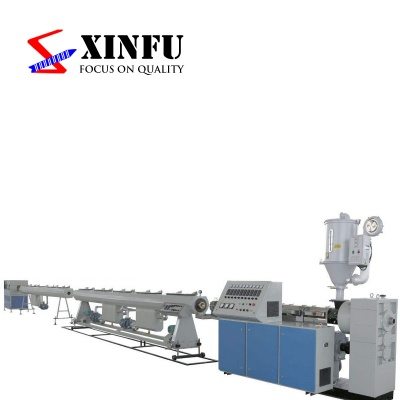
UHMWPE Pipe Production Line
- UHMWPE (Molecular weight 2.5–5.0 million g/mol)
- Specialized single-screw SJ-90B / SJ-150B / SJ-200B
- High-torque direct-drive gearbox, grooved feed section with intense cooling
More Technical Articles
- See You at Chinaplas 2025 — Xinfu Booth 3-Y09 (2025-03-06)
- 4 Sets of 5-Layer Greenhouse Film Blowing Machine Succeed for Initial Running (2018-09-29)
- Advantages of Punched Mulch Film (2020-12-09)