
Troubleshooting
Film Blowing Machine Troubleshooting: 7 Causes of Bubble Instability and Field Fixes
Bubble wander, breathing and sag ruin film gauge. A practical checklist of seven root causes on blown film machines and how field operators correct them.
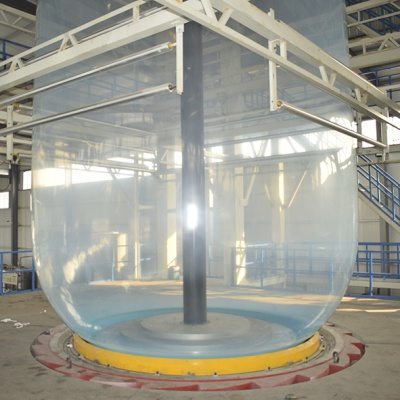
Ask any plant manager what causes gauge variation, roll telescoping and line downtime on a [film blowing machine](https://xinfumachine.com/products), and the answer is almost always **bubble instability**. When the bubble breathes, snakes or sags between the die lips and the nip rolls, even tight melt control cannot save roll geometry.
Diagnosing bubble instability is often frustrating because symptoms look identical whether the fault originates at the air ring, the frost line, the melt temperature or the haul-off tension. Here is the field-tested troubleshooting protocol our engineering team uses on Xinfu extrusion lines.
<h2>1. Unbalanced Air Ring Flow (Bubble Wander & Snaking)</h2> The most frequent cause of lateral bubble wander is **uneven cooling air delivery around the circumference of the die**. If one sector of the dual-lip air ring delivers 5% higher air velocity than the opposite sector, the frost line tilts, pulling the molten tube toward the colder side.
**Field fix:** Inspect the air ring plenum chamber for resin dust or oil film accumulation. Use an anemometer or pitot tube at 8 points around the lower lip to verify balanced airflow. On high-output [blown film machines](https://xinfumachine.com/products/greenhouse-film-machine), ensure the blower damper and intake filter are clear and symmetrical.
<h2>2. Melt Temperature Imbalance Across Die Zones</h2> Extruders deliver melt, but the die head must keep that melt at a uniform viscosity around 360 degrees. If one heating band fails or a thermocouple drifts by 8–10°C, polymer flows faster through the hotter die sector. This produces a thin, soft streak that bows outward under internal air pressure.
**Field fix:** Scan all die body zones with an infrared pyrometer. On co-extrusion lines using [die heads and molds](https://xinfumachine.com/products/die-head-mold/die-head-mold-for-blowing-machines), ensure spiral distribution channels are completely purged when switching resin batches, especially when running metallocene LLDPE blends.
<h2>3. Incorrect Frost Line Height (FLH)</h2> The frost line is where molten polymer crystallises into solid film. If the frost line sits too close to the die lip (under-cooling), the bubble locks too early, causing bubble shudder and brittle transverse tear. If the frost line rises too high toward the collapsing frame (over-cooling or excess output), the bubble breathes and sags.
**Field fix:** As a baseline rule of thumb for LDPE/LLDPE, maintain the frost line height at **1.5 to 2.5 times the die diameter**. On wide-width agricultural lines like our [3-layer greenhouse film blowing machine](https://xinfumachine.com/products/greenhouse-film-machine/3-layer-greenhouse-film-blowing-machine), adjust the iris ring opening and primary/secondary air velocity ratio to pin the frost line steadily in the lower third of the tower.
<h2>4. Die Lip Buildup and Contamination</h2> Degraded polymer and oxidised additives collect on the die exit edges over continuous runs. This die drool creates local drag and shear stress, scratching the bubble skin and causing periodic localized tearing or bubble flutter.
**Field fix:** Perform routine brass-blade scraping while the line runs at idle purge speed, or apply fluoropolymer processing aids (PPA) in masterbatch form to eliminate melt fracture and die lip buildup.
<h2>5. Inconsistent Extruder Melt Pressure (Melt Surging)</h2> If screw flight clearance is worn or barrel feed zones overheat, solid bed feeding slips. This manifests as cyclical pressure surging at the breaker plate, causing the bubble to expand and contract vertically like a breathing lung.
**Field fix:** Check barrel temperature zone 1 and zone 2 cooling fans. If pressure fluctuates more than ±2 bar at the die inlet, check the screw L/D ratio and feed throat temperature. Dedicated [film extruders](https://xinfumachine.com/products/pipe-extrusion-line) require grooved feed sections with independent water cooling jackets to maintain steady solids transport.
<h2>6. Collapsing Frame Misalignment and Static Drag</h2> As the round bubble flattens into layflat sheet, collapsing frame wooden slats, carbon fiber rollers or air-cushion boards must guide it gently. If the frame angle is too steep (greater than 14 degrees) or off-center from the die centerline, the bubble puckers and creases before reaching the nip rolls.
**Field fix:** Verify laser vertical alignment between the center of the die head and the center point of the top nip rollers. For thin film and tacky barrier films, use driven collapsing rollers or micro-hole air cushion plates to eliminate frictional drag.
<h2>7. Ambient Drafts and Factory Cross-Breeze</h2> A factor frequently overlooked in open workshops: a loading dock door opening or ventilation fan pointing toward the extrusion tower creates an asymmetric draft. A 1 m/s cross-breeze is enough to destabilise a 2-meter diameter bubble.
**Field fix:** Install protective wind-shielding curtains around the tower base up to the first walking platform. High-capacity agricultural and [geomembrane blowing machines](https://xinfumachine.com/products/geomembrane-machine) should always operate within a climate-baffled tower envelope.
<h2>Summary Checklist for Plant Engineers</h2> When bubble instability occurs, follow this sequence before making drastic recipe changes:
1. Check ambient drafts around the air ring. 2. Measure circumference air ring velocity with an anemometer. 3. Check die temperature uniformity across all zones. 4. Inspect die lips for drool or carbonised buildup. 5. Verify frost line height against die diameter standards.
If your line continues to suffer from chronic gauge fluctuation or output limits, the root cause may be an outdated die design or mismatched extruder screw geometry. Contact the engineering team at Xinfu on our [contact page](https://xinfumachine.com/contact) or via WhatsApp at +86 150 0683 0110 for customized line diagnosis and die head upgrades.
Recommended Production Lines
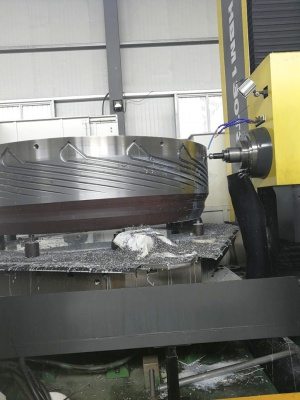
Die Head & Mold for Blown Film Machines
- Spiral die · 3-layer stack · 5-layer stack · geomembrane die
- Agricultural, mulch, packaging, greenhouse & geomembrane blowing machines
- New dies, refurbishment, upgrading layer count
More Technical Articles
- See You at Chinaplas 2025 — Xinfu Booth 3-Y09 (2025-03-06)
- 4 Sets of 5-Layer Greenhouse Film Blowing Machine Succeed for Initial Running (2018-09-29)
- Advantages of Punched Mulch Film (2020-12-09)